
I don't speak about risk. I speak about decisions.
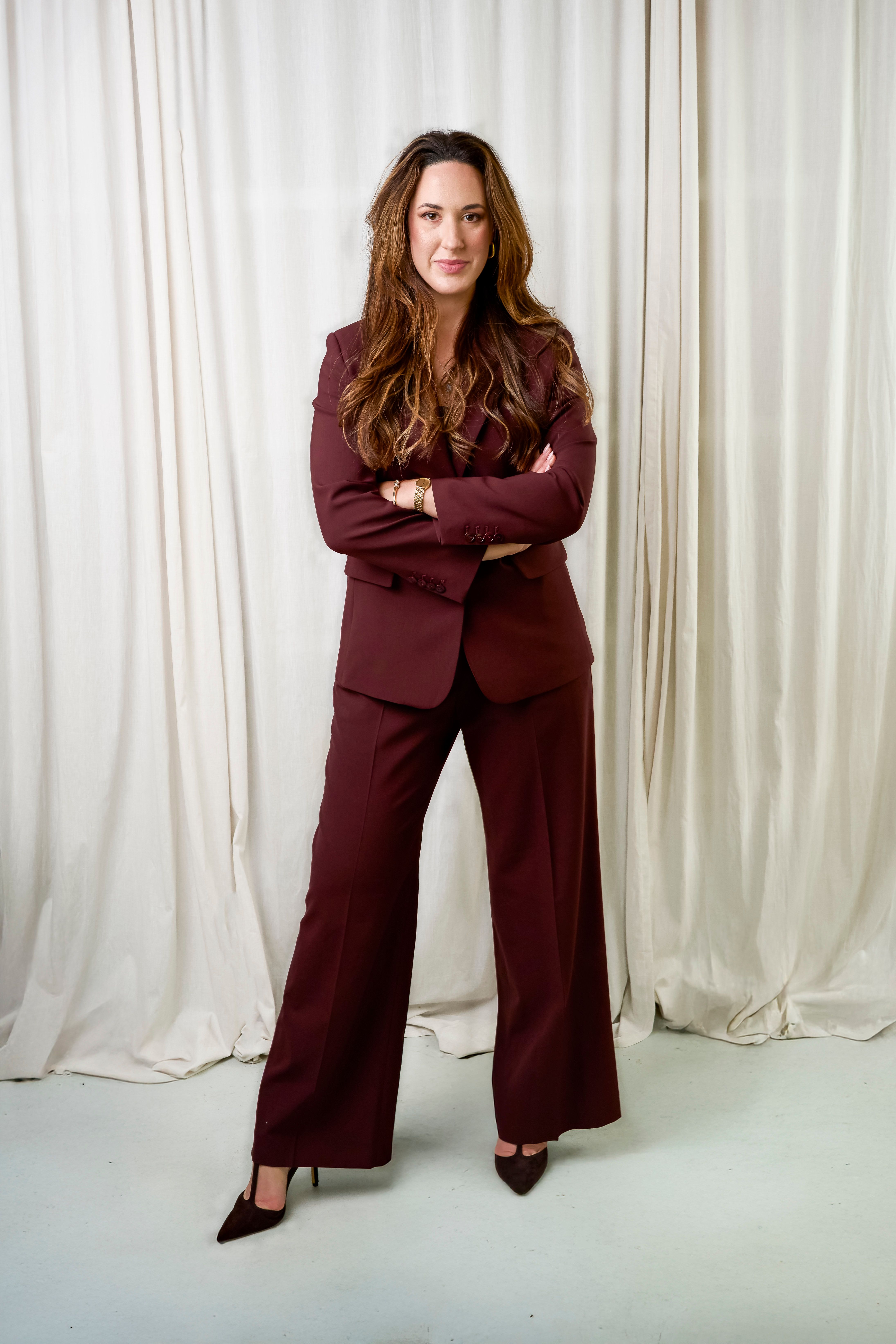
Julie Fawcett, Global Head of Enterprise & Operational Risk, Flow Traders, built her career in traditional financial services before moving to a crypto native trading firm. Her argument is that the interesting part of risk has never been the spreadsheet.
Most people hear the word risk and picture a department whose job is to say no.
She sees it the other way round.
"Compliance can tell you what you are allowed to do. A policy can tell you what you said you would do. But neither necessarily tells you what you should do when the situation in front of you is new, the information is incomplete, and there are legitimate trade offs."
In those moments, risk should help leadership make the decision rather than tell them why they cannot make it.
Deciding inside uncertainty
In practice that means getting very clear on a handful of things: what you are trying to achieve, what could materially hurt you, what assumptions you are making, and how much uncertainty you are willing to accept.
"Sometimes the right answer is to stop something. Sometimes it is to move forward with additional controls. And sometimes it is consciously accepting a risk because the opportunity justifies it."
What matters most is that someone owns the decision.
Good risk management does not remove uncertainty. It gives you the confidence to make decisions inside it.
What she had to unlearn
Julie built her expertise in traditional financial services before moving to a crypto native firm. The biggest thing she had to let go of was an assumption common in the industry she came from.
"The idea that maturity looks like more and more complex process. In traditional financial services, people often try to solve risk by adding governance: another committee, another control, another approval layer. In a fast moving environment, that can create a different kind of risk. You can build such a sophisticated process around making a decision that the business has moved on before you have made it."
What transferred well were the fundamentals: understand your exposures, know your critical processes, be clear about accountability, challenge assumptions, and put strong controls where they genuinely matter.
"The principles are remarkably consistent, but their implementation cannot always be. Risk professionals can sometimes confuse institutional maturity with institutional complexity. They are not the same thing."
What crypto gets wrong
Asked what people in this industry most often misunderstand about risk, she does not hesitate.
"That taking risk and managing risk are somehow opposites. Risk is not inherently bad. Every business takes risk, and innovation itself requires it. The question is whether you understand the risk you are taking, whether you are being compensated for it, and whether you can survive being wrong."
Crypto makes that unusually visible, because things move fast and consequences arrive quickly. But she is more concerned about what the industry tends not to measure.
"There can be a tendency to focus on the risks that are easiest to quantify, like market movements, liquidity and counterparty exposure, while underestimating the human and organizational ones. Poor incentives, unclear accountability, concentration of knowledge, weak challenge, or a culture where nobody wants to be the person who says 'I think we need to reconsider this' can be far more dangerous than a red box on a risk dashboard."
Some of the biggest risks in organizations never announce themselves as risks.

The courage to make the call
One of Julie's talks is titled "The Courage to Make the Call: Leadership When There Is No Perfect Answer." She describes the moment it is about.
A significant decision. Real commercial value in moving quickly. The business believes the risk is manageable. Risk can see scenarios where it goes wrong. The data is incomplete, there is no precedent that fits, and waiting for certainty has a cost of its own.
"Everyone wants risk or compliance to give them the answer, but there isn't an objectively correct answer. That is the moment leadership becomes very visible. You have to separate what you know from what you believe. You have to make the downside explicit. You have to listen to people who disagree with you without becoming paralyzed by disagreement. And eventually someone has to say: this is the risk we are prepared to take, or this is where we stop."
Her definition of courage is not the obvious one.
"Courage in leadership isn't always making the boldest decision. Sometimes it is slowing everyone down when momentum is pushing you forward. Sometimes it is allowing the business to proceed when your instinct as a risk professional is to eliminate every uncertainty. And sometimes it is simply putting your name behind a decision, knowing that hindsight may judge you with information you did not have when you made it."
Why this is not a dry subject
For any organizer wondering whether risk will lose an audience, her answer reframes the whole thing.
"I don't really speak about risk. I speak about decisions."
Risk is the lens, she says, through which she explores some very human questions. How do you decide without enough information? When do you trust your judgment? How do you challenge a room that disagrees with you? How do you tell courage from recklessness? What happens when you get it wrong? And how do you build an organization where people will tell you what you do not want to hear?
"Those questions apply whether you work in crypto, banking, technology or healthcare, and whether you lead a team of five people or hundreds. The spreadsheets and frameworks are part of the profession. But the interesting part of risk has never been the spreadsheet."
To make that concrete, one of the situations Julie works through is how a leadership team should approach a new product or a new market when the commercial upside is clear but the information and the precedent are not. The method she walks through is the same one she uses in the room. Separate what you actually know from what you are assuming. Make the downside explicit rather than hoping it stays small. Then decide, before you move, what level of risk you are consciously prepared to accept. The aim is not to remove the uncertainty. It is to move forward inside it with your eyes open, and with someone willing to own the call.
The other area she makes tangible is the set of risks that rarely show up on a dashboard. Accountability that is unclear, where everyone quietly assumes someone else is watching the problem. Key person dependency, where too much critical knowledge sits with one individual and leaves when they do. And cultures where people are reluctant to challenge a decision, so the warning signs are felt in the room long before anyone says them out loud. These are harder to measure than market or liquidity risk, and in her experience they are often the ones that do the most damage.
Julie Fawcett is in the Crypto Women Collective Speaker Index, speaking on regulation, policy, governance and institutional risk. The index is open and free to use, and anyone can contact her directly.
Connect with Julie on LinkedIn.