
Pesos in, euros out, a stablecoin in between
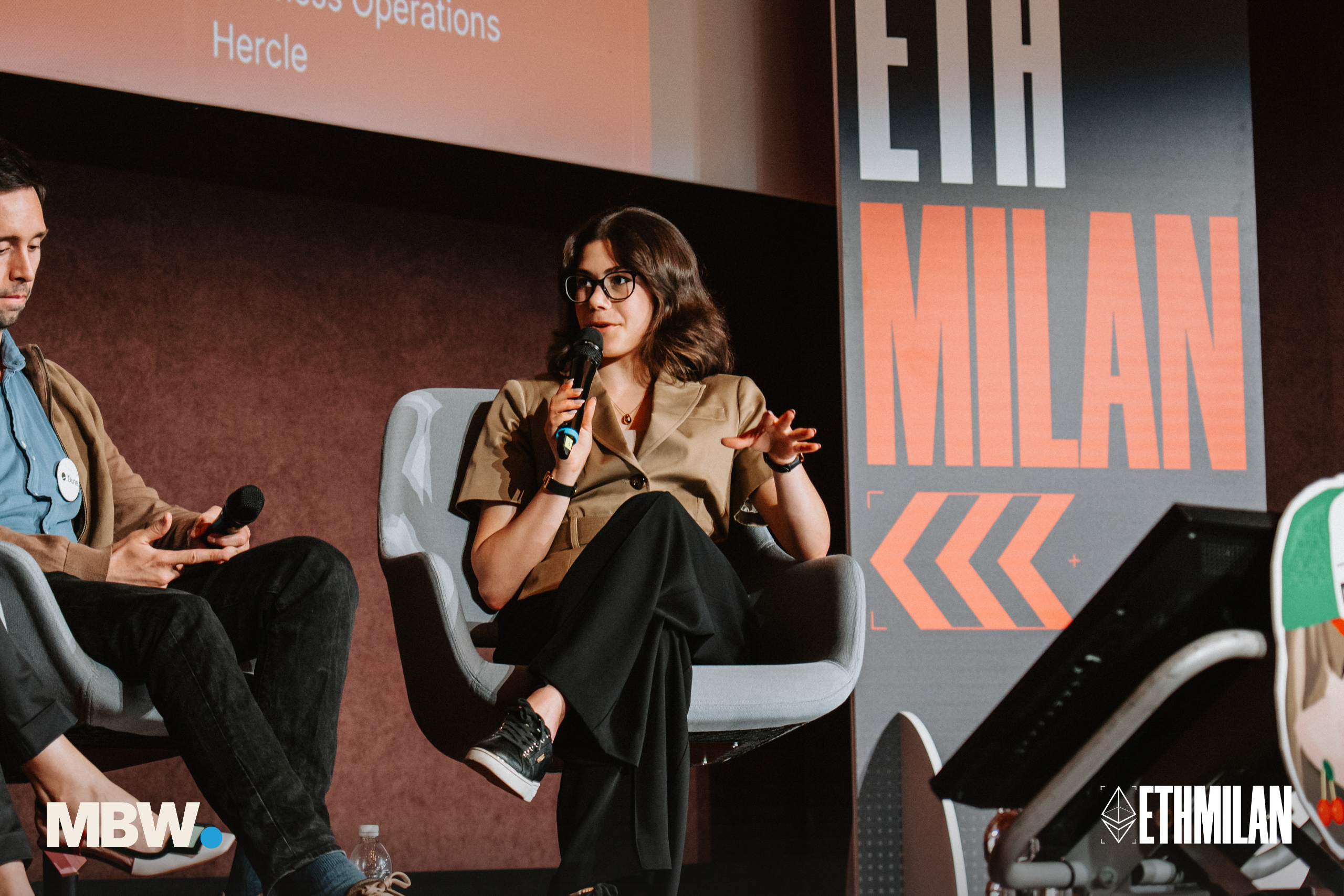
Olga Arzhaeva works at EcommPay, where traditional payment rails meet digital assets. Her case for stablecoins does not begin with crypto. It begins with where the money gets stuck.
She has watched the same technology land in two countries and get two completely different receptions.
Originally from Russia and now living in Italy, she sees a direct relationship between how much people trust the financial system and how fast they adopt digital assets. Among Russians she knows, crypto sits close to an ordinary bank account: familiar, and most people have at least a basic grasp of how to use it. In Italy, a stable banking and economic environment has given almost nobody a reason to look for an alternative, and crypto still reads to many as a speculative instrument, or as something adjacent to a scam.
That gap is the whole argument, and it is why she is precise about where stablecoins actually earn their place.
Where the rails fall down
The value lands, she says, with people and businesses sitting inside fragmented banking infrastructure, facing high barriers to financial access, or stuck with inefficient cross-border systems. APAC accounts for 51 percent of stablecoin payment activity, which she reads as the clearest demonstration available: near instant, relatively low cost interoperability between economic actors in places where the traditional infrastructure does not reach.
Beyond payments, there is ownership. Real control over your own funds, and protection against local currency inflation, which in an economy like Argentina is not an abstract benefit.
She is equally clear about where the case is weaker. Retail adoption in Europe and the US remains genuinely debatable, because domestic payment systems there are already highly efficient. For those markets she moves the argument somewhere else entirely, to tokenization and corporate demand rather than retail payments.
Two extremes, and the truth in between
Ask her what the industry keeps getting wrong and she describes two opposite mistakes, both common.
The first is the belief that anything involving stablecoins leads to fraud, or at least to breaching some regulation, so the safe move is to stay on traditional banking rails. The second is the conviction that stablecoins are a universal solution, that funds will arrive instantly at almost zero cost in every market, and that the job is simply to move off banking rails as fast as possible.
"As usual, the truth is somewhere in the middle."
Thailand still lacks regulatory clarity on digital assets, which eliminates the opportunity to access fully legitimate on and off ramp solutions, while spreads on local currency against USDT run well above traditional FX. Mexico has a far more established infrastructure, with instant, cheap and compliant delivery of funds. Governments are building frameworks and operators are building capability, but the state of play is country by country.
"For now it is essential to treat each country and use case separately to truly identify where stablecoins can bring significant benefits and value to your company."
A worked example
Take a European travel platform collecting Mexican pesos from Mexican customers.
Locally, nothing is broken. Payments already settle instantly through SPEI, a 24/7 banking rail used by 60 percent of Mexicans and processing close to 3.9 billion transactions a year. The bottleneck arrives afterwards: moving those pesos to Europe through correspondent banking takes several business days.
On stablecoin rails the same journey looks different. A licensed local partner collects the pesos through SPEI, converts them into USDT or USDC, and moves them within minutes to an off ramp into euros for merchant settlement, which is also instant where the counterparties share the same underlying banking partners.
The customer pays in pesos, the merchant receives euros, and neither needs to interact with crypto.
Stablecoins simply replace the inefficient cross-border settlement layer. Settlement times fall from days to minutes, and the cost roughly halves.

A TradFi foundation, and a crypto research division
Her route in was diverse but always tied to finance. She first met crypto through mining, because many of her Russian friends were in it.
The professional start was a student association during her bachelor's, where she and Luca Piermarini, now a digital assets product manager at Banca Sella, launched a crypto research division. Two people, working closely with Rome Blockchain Week, ETH Milan and NapulETH, moderating and building a bridge between the university and the business world. She went on to found Blockchain Student Association Italy, moved into public initiatives on the partnerships side, and last year was named Best Crypto Influencer by Wirex.
She studied corporate finance at Bocconi. Most of her classmates went into private equity and investment banking, which is exactly the contrast she finds interesting.
"The crypto world is evolving fast, and there are no fixed rules or predefined paths for what you should do to succeed. This is the most fascinating part."
Her view is that a TradFi foundation in management, finance and economics, combined with practical experience in payments, digital assets and trading, is what produces a real understanding of how the industry is changing. The more varied the background, the better you handle the unconventional situations that are routine in Web3.
The panel she would anchor
Her expertise sits between payments and digital assets: cross-border rails both traditional and stablecoin, liquidity, and banking infrastructure. The panel she would most want is "State of Stablecoins: B2B and B2C Adoption, Underlying Infrastructure, and the Financial Use Cases Behind It," because it gives her room to separate the retail perspective from the corporate one, and to connect both to banking, PSPs and regulation, along with the drivers and the blockers.
She would also take merchant trends on their own. Legacy players such as EcommPay, Worldpay and Stripe moving into digital assets is, in her words, an exciting story to analyze: how each of them approaches that convergence, validates the business use case, aligns the compliance stakeholders, and still delivers a flawless experience to the final customer.
Financial inclusion implies everyone
Finance, and the crypto side of it in particular, is among the most male dominated sectors anyone could work in. She thinks the trend is changing, and that more active participation from women is itself evidence of how far digital assets have become embedded across other sectors.
Her argument on inclusion is short and hard to counter: financial inclusion means everyone can take part, regardless of gender.
She names two people she admires for the institutional adoption work, Serena Sebastiani and Chiara Munaretto, through their projects Fuze and Stablecoin Insider, and for showing how women are moving into Web3 leadership positions not only in Europe but across MENA and Africa.
Not everyone wants the exposure
For a woman who knows her subject and has not yet put herself forward, her answer starts with a caveat most people skip.
"It depends a lot on the person. Not everyone likes to have public exposure, no matter how deep their expertise or how significant their real-world contribution is."
For her, the decision was that she had something to bring outside the office, and that payments in particular deserved more visibility for what digital assets could do for it. What made it possible was the room she found.
"I admire the Web3 world for its unique openness and support. In no other industry could one so freely share their ideas and be part of a community. Here, people appreciate when you express your opinion and try to make your own contribution."
So, to put it simply: where, if not here?
Olga Arzhaeva speaks on stablecoins and cross-border payments, the banking and liquidity infrastructure underneath them, merchant and PSP adoption, and financial inclusion in emerging markets. She works across both the traditional and stablecoin rails, and is as comfortable on the corporate use case as on the retail one.
Olga Arzhaeva is in the Speaker Index. The index is open and free to use, and anyone can contact her directly.
Connect with Olga on LinkedIn.